humanoids
The Invisible Bottleneck: Why Safety Certification, Not Intelligence, Will Decide the Humanoid Race
NVIDIA's Halos safety stack, unveiled at Automate 2026, reveals the real bottleneck in the humanoid race: it's not mobility or intelligence, but the grueling multi-year process of proving a robot won't injure the person working beside it.
By Maya Chen, Humanoid Robotics · June 29, 2026 · 9 min read
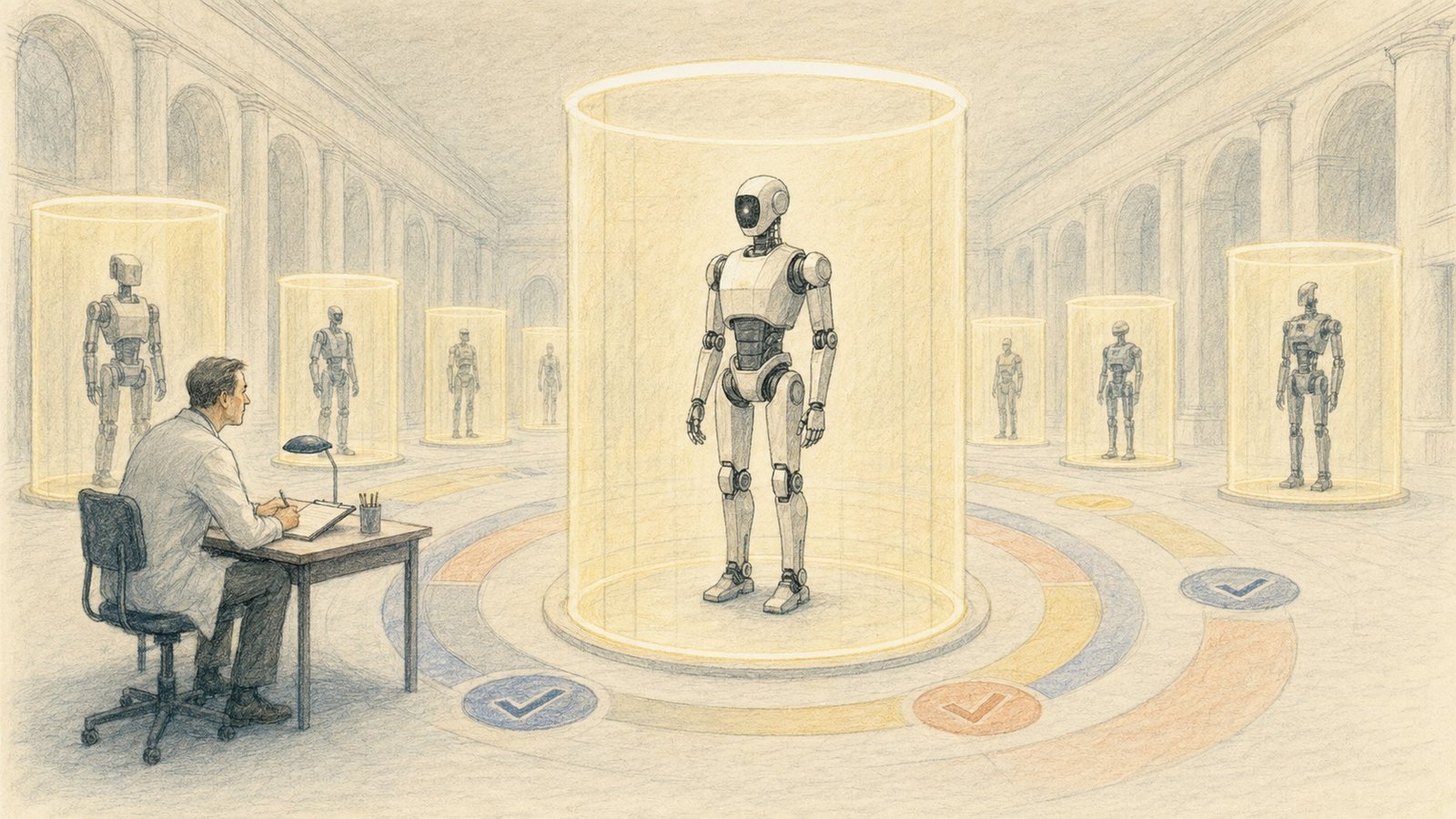
A humanoid robot and a human worker sharing a factory aisle, with safety sensor overlays visualized around them
For the past several years, the narrative surrounding physical AI has been entirely consumed by the pursuit of mobility and intelligence. The industry has obsessed over degrees of freedom, the latency of Vision-Language-Action (VLA) models, and whether a bipedal form factor can dynamically balance while carrying a forty-pound payload. We have collectively celebrated the fact that these machines can finally walk, grasp, and reason. But in the quiet offices of enterprise risk management, a much less glamorous reality has been taking shape: proving a robot can move is easy; legally proving it will not crush a human worker is the true existential bottleneck of the industry.
On June 22, at the Automate 2026 conference in Chicago, NVIDIA decisively addressed this reality by unveiling "Halos for Robotics." Billed as the industry’s first full-stack safety system for physical AI, Halos essentially ports the rigorous, paranoid safety architecture of autonomous vehicles directly into the brains of humanoid robots. By immediately announcing Agility Robotics as its flagship integration partner, NVIDIA signaled a monumental shift in the robotics landscape. The race is no longer simply about building the smartest robot; it is about building the most legally deployable one.
The End of the Caged Paradigm
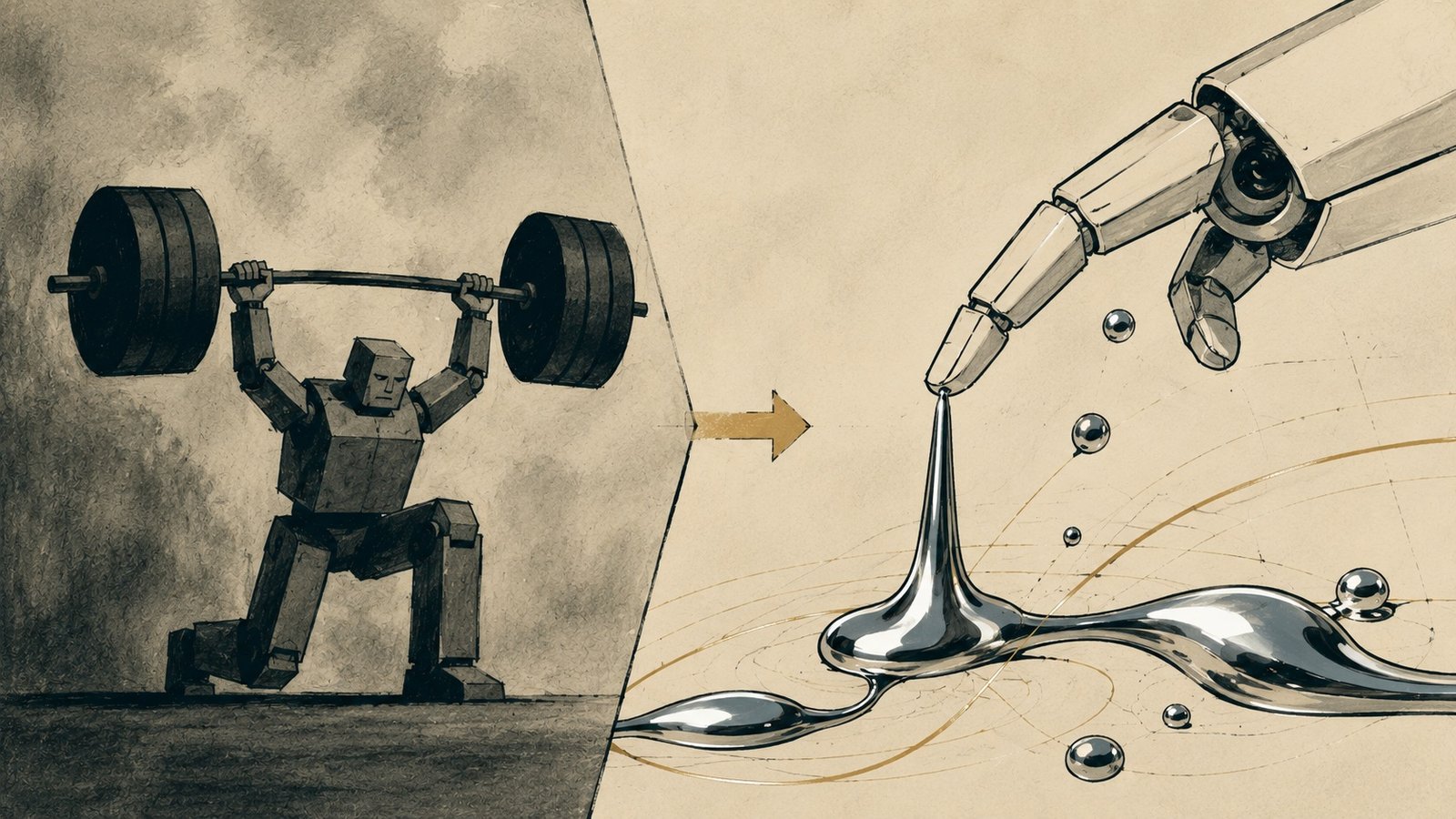
To understand the magnitude of this shift, one must understand how industrial robotics has historically handled safety. For decades, the solution was brutal but effective: physical isolation. Traditional robotic arms in automotive plants operate at blinding speeds and with lethal force, but they do so inside heavy steel cages. If a human opens the cage door, the power is immediately severed. The environment is perfectly structured, and the safety protocol is absolute, binary separation.
Humanoid robots fundamentally break this paradigm. The entire value proposition of a humanoid is its ability to operate in unstructured, human-centric environments, navigating warehouse aisles, sharing breakrooms, and reacting to unpredictable human movement. They cannot be caged. But the moment a two-hundred-pound machine steps out of a cage and into a dynamic workspace, the legal and operational liabilities skyrocket.
Current safety systems attempt to manage this by being overly restrictive. If a human steps within a ten-foot radius, the robot might freeze entirely or slow to a crawl, instantly destroying the productivity gains the machine was purchased to provide. The industry has been trapped in a zero-sum game between worker safety and operational efficiency. Solving this requires moving from hardware-based separation to software-defined, deterministic safety, a system that can perceive a tripping human, calculate the physics of the environment in milliseconds, and dynamically alter its path rather than simply shutting down.
NVIDIA's Strategic Play: The Android of Safety
What NVIDIA has built with Halos is far more than a software patch; it is an integrated architectural moat. Drawing on nearly two decades of autonomous vehicle engineering, the Halos stack unifies the AI compute layer (via the IGX Thor platform), the sensor layer, and the operating system into a single, certified environment.
But the brilliance of NVIDIA's strategy lies not just in the technology, but in the regulatory ecosystem it is fostering. Historically, a robotics startup might spend four to five years and up to a quarter of its total engineering budget attempting to achieve international functional safety certifications like IEC 61508 or ISO 13849. It is a grueling, repetitive process of proving diagnostic coverage and system redundancies to third-party auditors.
By launching the Halos AI Systems Inspection Lab, NVIDIA is essentially building a pre-certified fast lane for the entire industry. They have taken the foundational architecture to standards bodies and achieved accreditation, meaning that any robotics company that builds on top of the Halos platform inherits a massive portion of that compliance. If Tesla is taking the Apple approach, building a closed, proprietary safety architecture for its Optimus robots, NVIDIA is playing the Android strategy. They are commoditizing the hardest part of regulatory compliance and offering it to everyone.
The Gateway to Mass Deployment
For a company like Agility Robotics, which is under immense pressure to deploy its Digit humanoids into Amazon and GXO facilities following its $2.5 billion SPAC merger, partnering with NVIDIA is a strategic necessity. Enterprise customers will not deploy uncertified, black-box AI onto their factory floors, no matter how impressive the YouTube demos are. They require deterministic guarantees, backed by insurance underwriters and international standards.
NVIDIA has correctly identified that the ultimate gatekeeper to the physical AI revolution is not the limits of machine learning, but the strictures of corporate liability. By providing a unified safety framework, they are drastically reducing the deployment friction for their partners while simultaneously locking the industry deeper into the NVIDIA silicon ecosystem.
As the first wave of humanoids hits the warehouse floor, the companies that succeed will not necessarily be the ones with the most fluid gaits or the most expressive faces. The winners will be those who can mathematically prove that when the chaotic unpredictability of human nature intersects with heavy machinery, the machine will always make the safe choice. We have taught the robots how to work; now, we are finally teaching them how to coexist.
More From Robotics Weekly

Part of Issue 3: The Accountability Gap, published June 29, 2026→