humanoids
The SPAC Reality Check: What Agility's $2.5B Market Debut Means for the Future of Physical AI
Agility Robotics' $2.5B SPAC merger makes it the first pure-play humanoid company to face public markets, where Wall Street's quarterly earnings reports are far less forgiving than venture capital's infinite patience.
By Daniel Osei, Financial Analysis · June 29, 2026 · 11 min read
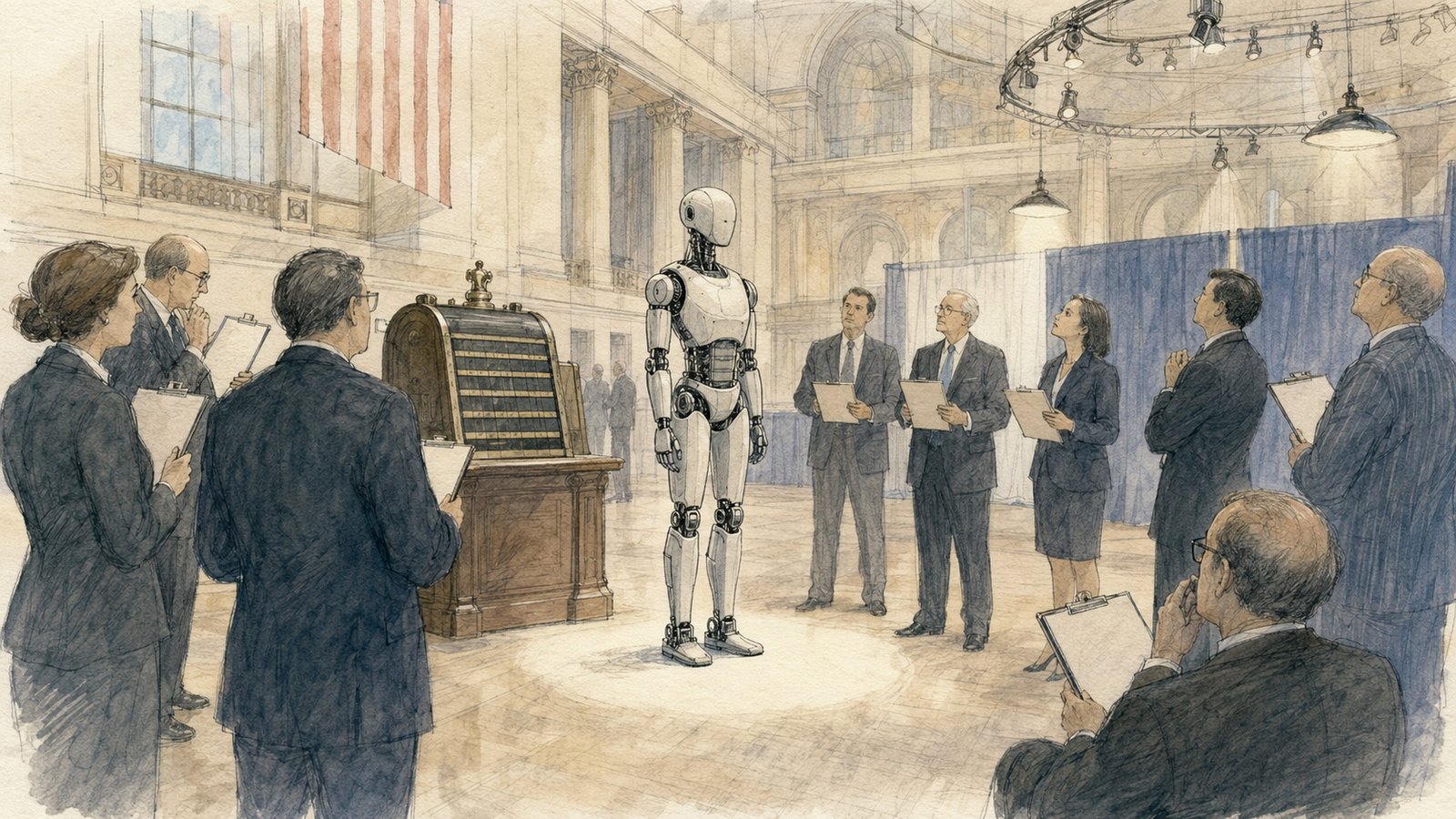
Agility Robotics' Digit humanoid on a warehouse floor against a backdrop of stock market indicators
We have spent the better part of a decade trapped in a venture capital reality distortion field. It was an era defined by perfectly lit, highly choreographed videos of bipedal robots performing gymnastics, folding laundry, or brewing coffee. In that vacuum, staggering private valuations were justified by theoretical futures where a single, general-purpose android could seamlessly replace human labor across every conceivable sector. But on June 24th, the theatrical era of humanoid robotics quietly ended, and the era of the unforgiving spreadsheet began.
Agility Robotics announced its intent to go public via a $2.5 billion SPAC merger with Churchill Capital Corp XI, making it the first pure-play humanoid company to hit a major exchange. This is not just a financial milestone; it is the ultimate stress test for the entire physical AI ecosystem. The transition from venture capital darling to public entity forces a brutal paradigm shift. Silicon Valley rewards the audacity of a vision, but Wall Street only rewards unit economics, predictable cash burn, and quarterly deployment metrics. For the first time, we are about to look under the hood of a humanoid robotics company and see the actual math.
The Economics of Atoms Over Bits
The fundamental setup of this SPAC demands a deeply critical eye, particularly given how harshly the public markets have punished similar hardware-heavy debuts in the electric vehicle and LiDAR sectors over the past few years. The deal values Agility at a pre-money equity of $2.5 billion, a figure heavily buoyed by a $200 million PIPE (Private Investment in Public Equity) backed by hardware manufacturing heavyweights like Foxconn and venture giants like SoftBank.
The bull case presented to institutional investors rests almost entirely on a massive, highly publicized backlog. Agility claims to have secured over $300 million in multi-year orders for its upcoming Digit v5 model. However, unpacking the financial reality beneath that topline number reveals the immense friction of scaling physical AI. The company reportedly burned through approximately $100 million in 2025, while trailing annual sales sit at a comparatively meager $37.2 million. This means the company is asking public investors to swallow a steep price-to-sales multiple of roughly 33x, a valuation reserved for hyper-growth software companies, not capital-intensive hardware manufacturers.
Furthermore, that $300 million order book represents unfulfilled promises, not immediate cash flow. Agility's most existential challenge is not convincing logistics companies to want their robots; the challenge is physically building them fast enough at their Salem, Oregon manufacturing facility to meet that demand without destroying their margins. Software scales infinitely and instantly. Atoms do not. The public market will not wait patiently for supply chains to catch up to ambition.
The Pragmatism of the "Worker Bee"
What makes Agility's Wall Street debut truly fascinating, and perhaps what gives it a fighting chance to survive the public markets, is its stark philosophical divergence from the rest of the industry. While competitors like Tesla with Optimus and various Chinese startups chase the seductive dream of a true "general-purpose" humanoid, a machine with the dexterity to play the piano and the intelligence to cook dinner, Agility has built a hyper-specialized worker bee.
Digit is aggressively pragmatic. It does not have highly articulated, five-fingered hands covered in silicone skin. It features simple, durable grippers designed to do exactly one thing relentlessly: pick up standard logistics totes and move them across warehouse floors. By purposefully stripping away the complex, human-like dexterity required for general-purpose tasks, Agility has drastically reduced both their hardware manufacturing costs and their points of mechanical failure.
They recognized early on that the humanoid revolution will not be won by the most human-like machine, but by the machine that can achieve a positive return on investment for a warehouse manager today, rather than a decade from now.
Renting Labor, Not Selling Metal
Hardware design is only half of the commercialization puzzle. Agility's path to justifying its $2.5 billion valuation relies on a strategic financial model that its flashier competitors are currently struggling to deploy at scale: Robotics-as-a-Service (RaaS).
Instead of forcing logistics giants to buy a six-figure robot upfront, a massive capital expenditure that requires boardroom approval and years of depreciation, Agility essentially leases Digit's labor by the hour or the shift. This transforms a daunting CapEx hurdle into a predictable operating expense for clients like Amazon and GXO. It cleanly aligns the cost of the robot with the cost of the human labor it is meant to supplement or replace.
This model drastically lowers the barrier to entry and creates a sticky, highly predictable recurring revenue stream that Wall Street analysts adore. However, RaaS is exceptionally capital intensive for the provider. Agility must front the cost of building the entire fleet, absorbing the manufacturing expenses long before the hourly rental fees recoup the investment. This dynamic perfectly explains the necessity of the $2.5 billion SPAC: they need a massive war chest of public capital to fund the physical fleet required to make the RaaS model mathematically viable.
The Invisible Moat of Safety
Beyond the balance sheet, there is a technical bottleneck that rarely makes it into the promotional videos but will make or break these deployments: auditable safety. On June 22, NVIDIA announced "Halos for Robotics," arguably the first comprehensive, full-stack safety system for physical AI, and notably named Agility as its flagship integration partner.
As these machines leave heavily structured, caged environments to operate autonomously alongside human workers on dynamic warehouse floors, software-defined safety is paramount. A foundation model dictating a robot's pathing is practically useless if the facility manager cannot legally or physically trust the machine not to crush a human who trips in front of it. By tightly integrating with recognized, deterministic safety architectures, Agility is building an invisible regulatory moat. They understand that enterprise adoption is gated by compliance and liability, not just raw intelligence.
Wall Street's reaction to Agility's ticker (expected to be AGLT) will dictate the funding environment for the entire physical AI sector. If Agility can successfully manufacture Digit v5 at scale, maintain their safety record, and convert that $300 million backlog into realized RaaS revenue, they will prove that the humanoid supercycle is a real, investable business. But if they stumble on the production line or miss their deployment forecasts, the resulting valuation collapse will drag the rest of the industry's momentum down with it. The reality distortion field has collapsed; the robots are finally on the clock.
More From Robotics Weekly



Part of Issue 3: The Accountability Gap, published June 29, 2026→