robotics-markets
The $2.8 Billion Verdict: Why Full-Stack Robotics is Defeating the Brain in a Jar
X Square Robot's $2.8 billion Series C, backed by Xiaomi, Alibaba, and ByteDance, is a market verdict: modular robotics is dead, and the future belongs to companies that co-design the model and the machine.
By Daniel Osei, Financial Analysis · July 6, 2026 · 9 min read

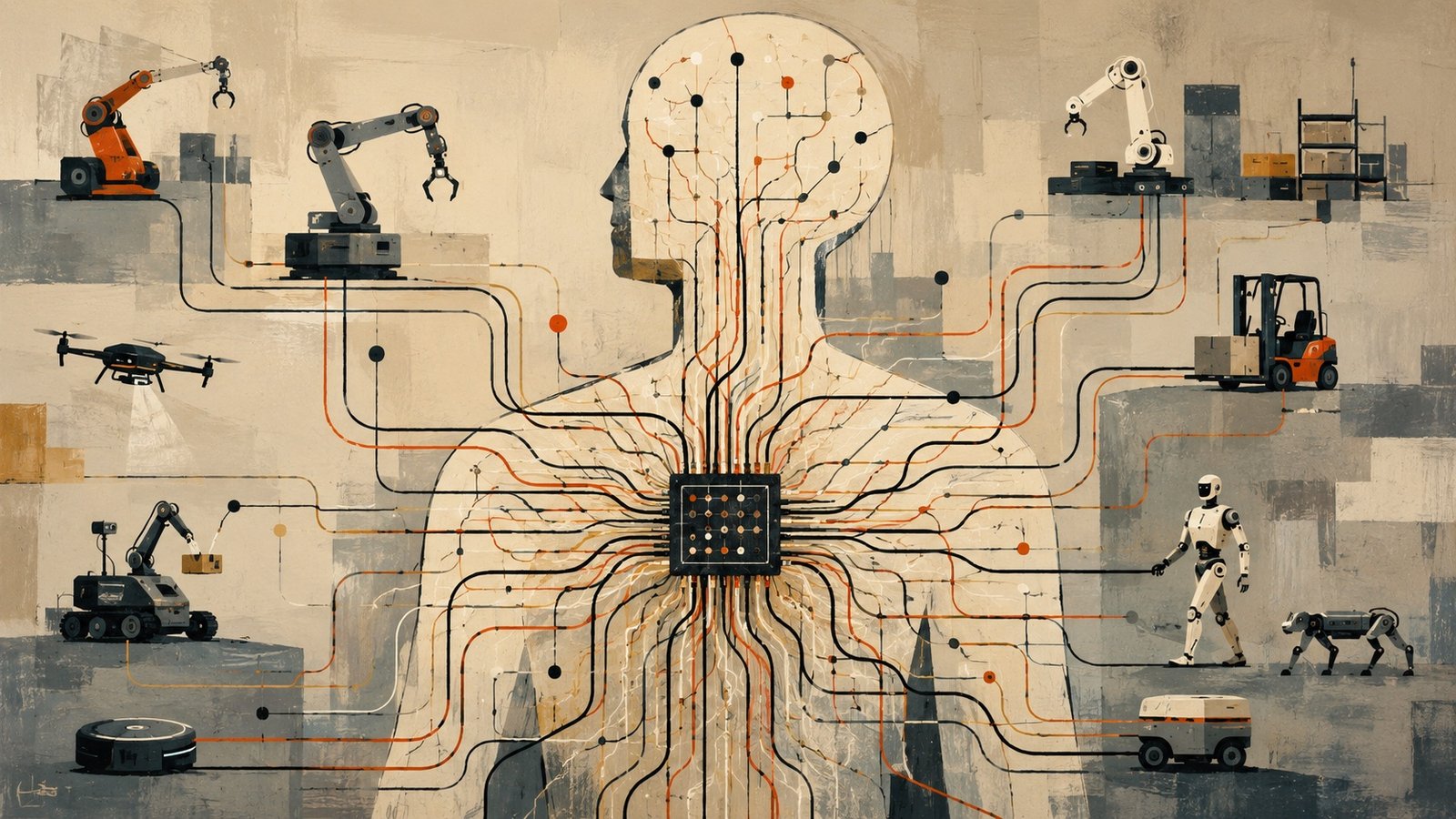
Side-by-side architectural diagram comparing a modular brain-in-a-jar robot stack versus a fully integrated proprietary stack
When X Square Robot closed its Series C last week, vaulting past a $2.8 billion valuation, the cap table, featuring IDG, Xiaomi, Alibaba, and ByteDance, sent a definitive message. The market is no longer subsidizing modular robotics. The era of bolting an off-the-shelf Large Language Model onto a third-party chassis is dead.
The extraordinary premium placed on X Square stems directly from their architectural philosophy: a ruthless, first-principles integration of proprietary foundation models, custom robotics hardware, and a closed-loop data pipeline. They are proving that in the physical world, hardware and software cannot simply shake hands via an API. They must be co-designed from the ground up.
The Flaw in the Modular Illusion
For the last three years, a seductive but flawed narrative dominated the industry: build a sufficiently smart API, rent a commercially available bionic body, and let the cloud handle the translation. This modular approach treated the robot as a dumb terminal, a meat-puppet waiting for cloud-based instructions.
This strategy fails upon contact with physical reality. Off-the-shelf LLMs are disembodied; they understand language, not torque, friction, or gravity. When you attempt to duct-tape a text-based reasoning engine to an arbitrary hardware interface layer, the result is crippling latency and a total lack of proprioception. If a robot is attempting to catch a falling object or adjust its grip on a degrading surface, it cannot wait for a network round-trip to decide how much current to send to its actuators.
The modular approach inevitably creates an unbridgeable semantic gap between what the "brain" wants to do and what the "nervous system" is actually capable of executing.
The Triumph of First-Principles Integration
X Square’s valuation is a direct reward for rejecting this fragmentation. Their system is built on WALL-B, an embodied AI foundation model that trains perception, language, action, and physical prediction within a single, unified network.
By designing the foundation model and the hardware interface layer concurrently, X Square eliminates the translation penalty. The neural network isn't just generating text that gets parsed into code; it is directly outputting low-level motor commands.
This is the exact architectural necessity driving the most advanced Vision-Language-Action (VLA) models today. As demonstrated by highly integrated frameworks like the X1-D model, true physical generalization requires visual understanding, natural language reasoning, and motor control to be natively fused. You cannot achieve this level of deterministic, ultra-low-latency execution without owning the entire stack down to the industrial controllers. When the model and the hardware are co-developed, the physical limitations of the actuators inform the parameter weights, and the requirements of the neural network dictate the sensor payload.
The Data Flywheel Demands Hardware Ownership
The third, and perhaps most critical, pillar of X Square's $2.8 billion valuation is their proprietary data pipeline.
Generalized intelligence requires an endless stream of multimodal, edge-case data, the kind that physics simulators simply cannot accurately generate. X Square’s real-world deployments in homes and industrial environments act as a continuous feedback loop. When a robot encounters a failure state, that specific, high-fidelity sensorimotor data is captured, cleaned, and fed directly back into WALL-B.
You cannot build this data engine on third-party hardware. If you don't control the sensor array, the telemetry formatting, and the edge-compute cycle, you cannot guarantee the synchronization required to train a unified model. X Square’s custom hardware isn't just about better movement; it is a purpose-built telemetry harvester designed to feed their specific neural architecture.
The Market's New Benchmark
X Square Robot’s milestone is a stark warning to the rest of the industry. The venture capital community has realized that generalized robotics is not a software problem that happens to involve hardware. It is a unified physics problem.
Companies attempting to be the "Windows of Robotics" by supplying only the OS to fragmented hardware manufacturers will find themselves continually outmaneuvered by full-stack competitors. The market has placed its $2.8 billion bet: the future belongs exclusively to the integrators.
More From Robotics Weekly


Part of Issue 4: Who Owns the Stack, published July 6, 2026→